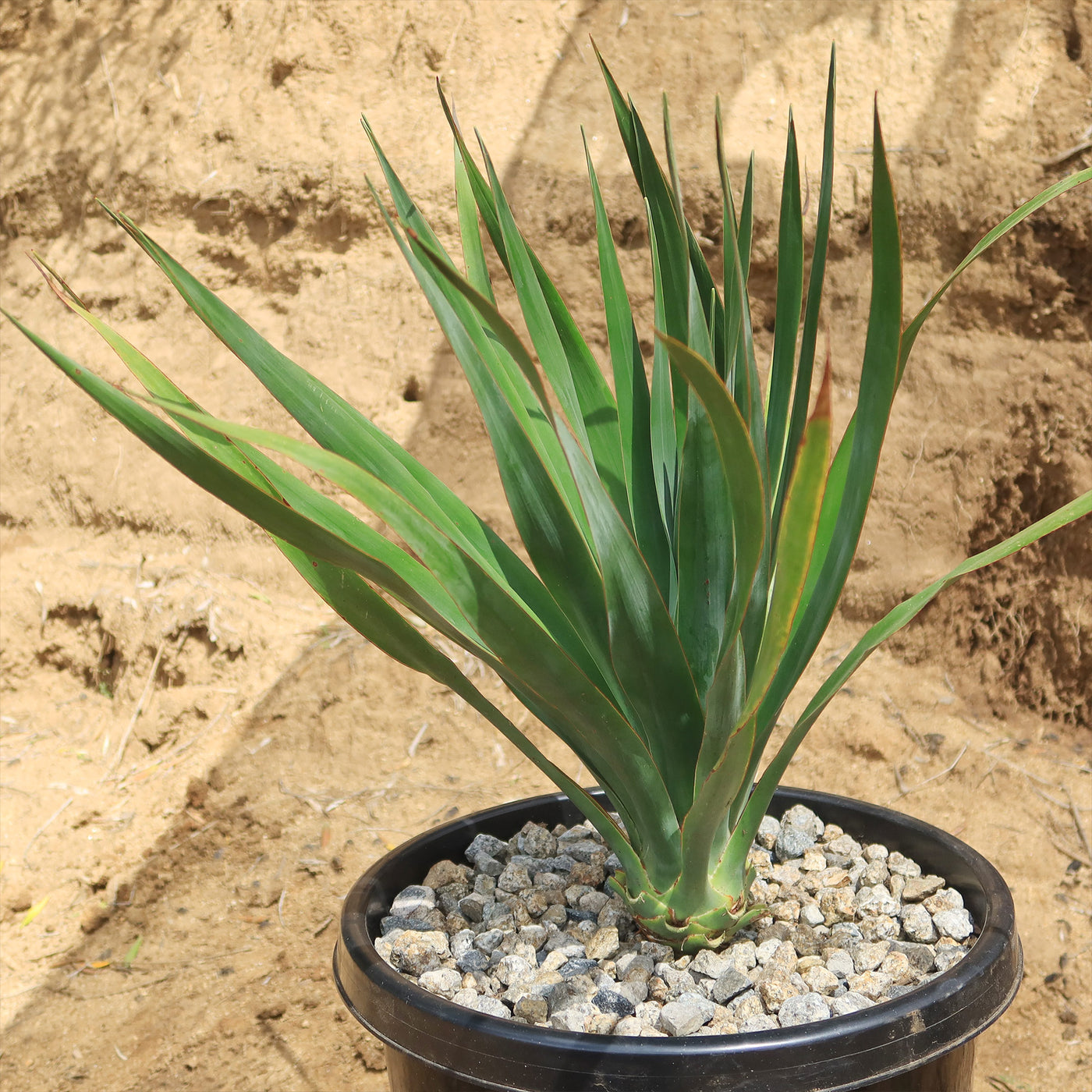
buy dracaena draco Shop 'Dragon Tree
SKU: 8099715223
buy dracaena draco

buy dracaena draco Shop 'Dragon Tree

Sale price$19.49 Regular price$21.66
Save 10%

Pay in installments of $5.42 with ShopPay, AfterPay and Klarna

Shipping Estimate
USA
  • USA
  • CAN

Ships within 48 hours · Estimated delivery Jul 3 - Jul 8

Promo Codes Available:

For Your Every Summer RSVP, with Code: SUMMER15

Description

buy dracaena draco Shop 'Dragon TreeIntroducing the Dragon Tree, also known as Dracaena draco. The Greek word "drkaina," which means "female dragon," gave rise to the name "dracaena." This refers to the 'Draco' kind of brilliant red resin. The name "dragon tree" is believed to have originated from the red sap that oozes from the trunk when cut, resembling a dragon's blood. This unique characteristic has contributed to its mythical and intriguing reputation. Hailing from Madagascar, it

Introducing the Dragon Tree, also known as Dracaena draco. The Greek word "drákaina," which means "female dragon," gave rise to the name "dracaena." This refers to the 'Draco' kind of brilliant red resin. 

The name "dragon tree" is believed to have originated from the red sap that oozes from the trunk when cut, resembling a dragon's blood. This unique characteristic has contributed to its mythical and intriguing reputation.


Hailing from Madagascar, it is also known as the Madagascar dragon tree and goes by many other common names such as dragon blood tree, corn plant, ribbon plant, Asparagus Draco, and dragon's blood plant.

The dragon tree, a tall, cylindrical tree with sword-shaped leaves, grows tall in the landscape, whereas the houseplant is shorter but has identical leaves.

This dragon tree stands tall and can grow up to 15 feet tall in its natural habitat.

If grown indoors, it can grow up to 4 feet boasting a thick cylindrical trunk adorned with stunning rosettes. These rosettes are no ordinary ones either; they are crowned with magnificent sword-shaped leaves that will make you feel like you've stepped into a mythical kingdom.

The dragon plant flowers bloom from late winter to early spring, with white flowers, which are produced in clusters on the tips of its branches. The flowers emit a strong, sweet fragrance that attracts pollinators such as bees and butterflies. The blooming period is relatively short, lasting only a few weeks.

Interesting Facts

  1. The dragon tree has a thick, gnarled trunk that adds a touch of character and charm to its overall appearance.
  2. It has a long lifespan and can live for several decades, becoming a cherished part of your home.
  3. Its sap is a vibrant red color, giving it a dramatic and eye-catching appearance.
  4. The Dragon Tree is believed to bring good luck and positive energy to its surroundings, according to ancient folklore.

Propagation of the dragon tree can easily be done by stem cuttings. Simply take a cutting from the stem of the healthy plant and allow it to dry out before planting it in well-draining soil. Keep the cutting in a warm, humid environment to encourage root growth.

With its show-stopping presence, this dragon blood tree will undoubtedly add to the landscape of your lovely home. Plus, this slow-growing plant is perfect for those who want to add something truly special to their collection.   

Watering Needs 

The dragon blood tree is a succulent shrub that definitely stands out from the rest. Since it is a drought-tolerant plant, it does not need much water, but should not be overwatered or underwatered. But here's a fun fact - unlike most trees, dragon trees do not tolerate prolonged drought well. 

In fact, during the scorching summer months, it might require watering once a week to keep those arms perky and looking their best. Keep the soil moist but not saturated.

If you ever notice your dragon blood plant gradually curling towards the center, don't freak out! That just means they're thirsty and in need of some water. So, make sure to water them thoroughly when you see this happen (but be careful not to let them stand in watery soil), or else risk facing root rot - yikes! 

Stay on top of your watering game with this quirky dragon plant and watch as they continue to thrive and turn heads with their unique appearance. 

Light Requirements 

If growing indoors, place your Dracaena tree a few feet away from the south-facing window. If they don't receive enough light for a long period, their stems may grow leggy and become paler and their spines will shorten; so, make your house plant happy and give it plenty of light. 

For outdoor cultivation, the dragon tree requires a lot of light and should be grown in either full sun or part shade. New plants can get burned in the full sun as they were probably grown in a greenhouse; therefore, dragon blood tree exposure to sunlight gradually increases. If the sun is too bright and is burning your plant's leaves, consider purchasing a sunshade or moving the plant to a more shaded location.  

The dragon tree can also thrive in filtered or low-light conditions. It can also grow in areas that are partially shaded, but not in those that receive direct sunlight. The plant is vulnerable to exposure to the full sun. 

Optimal Soil & Fertilizer Needs 

Dracaena plant favors very airy, sandy soil that drains well. Planting them in ordinary soil will result in compacted roots, stunted growth, and most likely root rot. Instead, make or buy a well-draining regular potting soil, or ideally use Soil Cactus Mix Blend 1 Gal 4 Qtour specialized potting mix that contains over 5 natural substrates and mycorrhizae to promote the development of a strong root system that helps your blood tree to thrive. 

When it comes to fertilizing your dragon blood trees, it only needs a tiny bit applied once a year in the spring growing season with a balanced liquid fertilizer that has lower doses of NPK (5-10-5). No harsh chemicals here, folks - just pure, natural goodness that lasts longer and encourages nutrient absorption, so your succulent stays happy as a clam.  

So go ahead and give your Dragon's blood plant some love with a good natural fertilizer because when it comes to soil and fertilizers, through experience, we know what works best!  

Hardiness Zones & More 

When growing indoors, the Dragon Tree prefers average room temperatures ranging from 6°F to 75°F. It can tolerate slightly cooler temperatures, but it's best to avoid extreme temperature fluctuations. It is adaptable and can tolerate average indoor humidity levels. However, it appreciates a slightly higher humidity level, so misting the leaves occasionally or placing a humidifier nearby can be beneficial, especially during dry winter months.

For outdoor cultivation, the Dragon Tree is best suited for USDA hardiness zones 9 to 12, which are regions with mild winters and warm climates. The Dragon Tree can tolerate temperatures as low as 30°F for short periods but prefers temperatures above 50°F. It's important to protect it from frost and extreme temperature fluctuations, as they can damage the plant.

Final Thoughts

Overall, the Dragon Tree (Dracaena draco), is a stunning indoor plant with spiky foliage that adds a touch of exotic beauty to any space. It's known for its easy care, making it perfect for beginners. This plant thrives in bright, indirect light and can tolerate lower light conditions too. It likes average room temperatures and can handle normal indoor humidity levels. Just water it when the top inch of soil is dry, and mist the leaves occasionally for a little extra humidity. 

We think you will love this dragon plant – order your very own Dracaena draco - Dragon blood tree for sale and start enjoying its beauty in no time!  

Shipping Notes
  • Free Standard Shipping on $100+ Orders to the USA.
  • Except Preorder products are shipped in 48 hours.
  • Delivery to the USA:
  1. Standard Shipping : 3-10 business days
  • If time is of the essence, please consider selecting expedited delivery for faster service.
Exchange/Return Notes
  • We offer a 30-day return/exchange service after receiving.
  • Final sale items are not eligible for returns or exchanges.
  • To process your return/exchange, please contact us at [email protected]
  • Please click here for more details>>> Return & Exchange Policy
SKU: 8099715223

Discover Niche Categories That Outsell buy dracaena draco

Top-Converting Item to Boost Your Average Order

4.7 ★★★★★
Based on 210 reviews
Sort
Highest Rating
Newest First
Oldest First
Product Reviews
M
Verified Purchase
Maggie N
San Leandro, US
★★★★★ 5
Putting one foot in front of the other
Format: Paperback
I actually bought this book as a gift for a friend who is considering making this pilgrimage. I read it for the first time when it was first published, just because Joyce Rupp is one of my favorite spiritual writers. She has a gift for delving into the spiritual on many levels, from the perspective of a woman, a woman religious, one acquainted with the life and love of God. She writes in an incredibly lucid manner and captures the divine in the midst of life struggles, always prayerfully, with uncommon insight and compassion. In this small and readable volume she tells it like it is. This book differs somewhat from others I've read in that it is her own lived experience of making this journey across Spain. It's illustrated with photos from that journey and populated and enriched with the varied pilgrims she met along the way. I recommend it especial for anyone contemplating making this amazing journey, but also for those of us who wish we could.
WAS THIS REVIEW HELPFUL?YesReportShare
Reviewed in the United States on September 9, 2013
J
Verified Purchase
Julie W. Capell
Alexandria, US
★★★★★ 5
Must read before walking the Camino
Format: Kindle
Beautiful, thoughtful account of the many ways walking the Camino can challenge us and help us grow. By far the best of the Camino books I read.
WAS THIS REVIEW HELPFUL?YesReportShare
Reviewed in the United States on October 16, 2025
M
Verified Purchase
Mountain Rose
San Leandro, US
★★★★★ 3
Not a bad first-person account
Format: Paperback
I had mixed thoughts about this book. It's the author's personal experiences and thoughts about the Camino, but aren't most books about the Camino? I tend to think it's a little too much interior maundering, how every part of the experience affected the writer. Still, what would you expect? I have to call this just an ok read. Most of the reason I liked it at all is because I am intrigued by the Camino and enjoy reading about it. The writer is a dedicated sister and her companion was a retired priest. I enjoyed the places where she touched on Catholicism, but there wasn't much of that. But there was the part of the book that I found a jarring note, and that was about her take on some fellow Catholics. She and her companion meet a group of three helpful, warm, caring priests and take them to be Jesuits. The priests inform them that that are Opus Dei. As the sister and priest continue walking, they find they are both astounded at the goodness of these men, since Opus Dei is considered to be extremely wealthy, conservative, and have strong ties to traditional Rome. (I thought all Catholics felt they have ties to Rome. I myself talk about the year I "crossed the Tiber.") It is just amazing to this twosome that such nice men could be from wealthy, conservative Opus Dei. I thought this antipathy toward a Catholic group known to do good works told a lot more about the writer than about the well-met priests--maybe more than she intended to let slide about herself. It was the one part of the book that struck a negative note for me. Other than that, I also wished for more at the end. They finished the Camino and went on to Finisterre. (Huh? What happened to the time spent at the Cathedral at the end? The beauty of the place and the experience of Mass there, and that wonderful incense burner. That whole part was left out.) I finished the book and consider it just "ok".
WAS THIS REVIEW HELPFUL?YesReportShare
Reviewed in the United States on November 30, 2021
E
Verified Purchase
E. Lingle
Lowell, US
★★★★★ 5
Been on the Camino and love this book
Format: Paperback
I am a Joyce Rupp fan. I'd always dreamt of doing the Camino some day, and when I saw that Joyce had done it, and written a book about it, I quickly bought it and read it. Her book gave me the courage to buy a plane ticket and go. I'm a hiker and camper. I could tell from reading her book that some of the facets of the hike- some of the albergues, some of the pilgrims, some of the food-- etc etc-- were perhaps harder for her to accept than they would be for me. I thought she gave a really honest appraisal of how things were for her, and was touched by how she eventually resolved some of those contretemps. I recently was looking at reviews of the book and was surprised to see some of the negative reviews. What I got from reading Joyce's book was an honest look at the Camino from the eyes of a middle-aged woman used to her own personal space, solitude, food, level of cleanliness, etc. One does necessarily give a lot of that up when on the Camino, if you stay in the albergues! They are fabulous places for meeting people from all over the world- but they can make you cringe if you are not used to hearing snoring at night. What I love about this book is the life lessons, her thoughts on what she found there, and what she got out of it in spite of -- and maybe even because of her discomfort. I recommend this book for mature people thinking of hiking the Camino. In 2011 I accompanied a women's group from my church from Samos to Santiago, and I asked them all to read the book-- they liked it, too.
WAS THIS REVIEW HELPFUL?YesReportShare
Reviewed in the United States on August 22, 2013
E
Verified Purchase
Erik Olson
Draper, US
★★★★★ 5
A Pilgrimage Of Body and Spirit
Format: Paperback
Back in the summer of 2003, I visited a former seminary roommate in Leon, Spain. I showed up a couple of days before his wedding after backpacking through Amsterdam, Paris, London, and Madrid. While strolling together through Leon, my Spanish friend remarked that people thought I was a "Pilgrim" because of my clothing and backpack. I asked him to clarify, and he replied that Leon was on the path of the Camino Pilgrimage. Thus began my interest in the topic. "Walk in a Relaxed Manner" was the first book I read about the Camino. It's newly published, written by a 60-year-old nun who walked the Pilgrimage around the time I was in Leon. She hit the trail with a retired priest, and this book was born from that experience. The subtitle and theme is "Life Lessons From the Camino," and each chapter is based on a way she grew due to the Pilgrimage. For example, the book's title is shared with a chapter where Sr. Rupp describes how she learned to walk slowly and thoughtfully instead of quickly and competitively. Other chapter titles include "Savor Solitude," "Deal with Disappointments," and "Live in the Now." Such topics may strike some as trite. But I found it impressive that more often than not, it was the walk's difficulties that enabled her to internalize these truths. The author writes in a clear and readable manner. She rejoices in the high points of the Pilgrimage, and is honest about the lows as well. Each lesson is presented in a thoughtful manner, and all are applicable to everyday life. However, like many spiritual insights perhaps some sort of defining experience is required to truly own them. But reading about these truths may be a way to prepare the heart for their eventual actualization. Although a Catholic nun in the Servite Community, Sr. Rupp keeps things fairly ecumenical throughout her tale. In addition, practical advice about the Pilgrimage is sprinkled throughout the book, and a list of helpful Camino resources is included at the end. There's even an authorized website based on Joyce Rupp's name if you want more info about her. Someday I'd like to do the El Camino Pilgrimage. I hope I don't have to wait until my sixties, but sometimes you have to let things happen in their time. If I do walk it, I'll be glad if I learn and grow half as much as Sr. Rupp did. Recommended for all travelers and pilgrims. UPDATE 9/7/07: Well, I only had to wait until I was forty to do the Camino. On 7/14/07 I stepped off in St. Jean Pied-de-Port (France), and on 8/24/07 I walked into Santiago, Spain. After returning home to the US, I went through this book again. It was nice reading about familiar places on the Way, and also to identify with the lessons Ms. Rupp writes about. Recommended even more now that I've actually done the trek.
WAS THIS REVIEW HELPFUL?YesReportShare
Reviewed in the United States on December 29, 2005

recommand products